

|
REBETOL® (ribavirin, USP) Capsules
|
||||||||||||||||||||||||||||||||||||||||||||||||||||||||||||||||||||||||||||||||||||||||||||||||||||||||||||||||||||||||||||||||||||||||||||||||||||||||||||||||||||||||||||||||||||||||||||||||||||||||||||||||||||||||||||||||||||||||||||||||||||||||||||||||||||||||||||||||||||||||||||||||||||||||||||||||||||||||||||||||||||||||||||||||||||||||||||||||||||||||||||||||||||||||||||||||||||||||||||||||||||||||||||||||||||||||||||||||||||||||||||||||||||||||||||||||||||||||||||||||||||||||||||||||||||||||||||||||||||||||||||||||||||||||||||||||||||||||||||||||||||||||||||||||||||||||||||||||||||||||||||||||||||||||||||||||||||||||||||||||||||||||||||||||||||||||||||||||||||||||||||||||||||||||||||
|
|
||||||||||||||||||||||||||||||||||||||||||||||||||||||||||||||||||||||||||||||||||||||||||||||||||||||||||||||||||||||||||||||||||||||||||||||||||||||||||||||||||||||||||||||||||||||||||||||||||||||||||||||||||||||||||||||||||||||||||||||||||||||||||||||||||||||||||||||||||||||||||||||||||||||||||||||||||||||||||||||||||||||||||||||||||||||||||||||||||||||||||||||||||||||||||||||||||||||||||||||||||||||||||||||||||||||||||||||||||||||||||||||||||||||||||||||||||||||||||||||||||||||||||||||||||||||||||||||||||||||||||||||||||||||||||||||||||||||||||||||||||||||||||||||||||||||||||||||||||||||||||||||||||||||||||||||||||||||||||||||||||||||||||||||||||||||||||||||||||||||||||||||||||||||||||||
|
DESCRIPTION REBETOL is Schering Corporation's brand name for ribavirin, a nucleoside analog. The chemical name of ribavirin is 1-ß-D-ribofuranosyl-1H-1,2,4-tria-zole- 3-carboxamide and has the following structural formula: 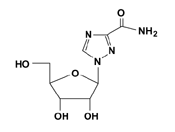 Ribavirin is a white, crystalline powder. It is freely soluble in water and slightly soluble in anhydrous alcohol. The empirical formula is C8H12N4O5 and the molecular weight is 244.21. REBETOL Capsules consist of a white powder in a white, opaque, gelatin capsule. Each capsule contains 200 mg ribavirin and the inactive ingredients microcrystalline cellulose, lactose monohydrate, croscarmellose sodium, and magnesium stearate. The capsule shell consists of gelatin, sodium lauryl sulfate, silicon dioxide, and titanium dioxide. The capsule is printed with edible blue pharmaceutical ink which is made of shellac, anhydrous ethyl alcohol, isopropyl alcohol, n-butyl alcohol, propylene glycol, ammonium hydroxide, and FD&C Blue #2 aluminum lake. Mechanism of Action Ribavirin/Interferon alfa-2b, recombinant. The mechanism of inhibition of hepatitis C virus (HCV) RNA by combination therapy with REBETOL and INTRON A has not been established. CLINICAL PHARMACOLOGY Pharmacokinetics:: Ribavirin Single- and multiple-dose pharmacokinetic properties in adults with chronic hepatitis C are summarized in TABLE 1. Ribavirin was rapidly and extensively absorbed following oral administration. However, due to first-pass metabolism, the absolute bioavailability averaged 64% (44%). There was a linear relationship between dose and AUCtf (AUC from time zero to last measura-ble concentration) following single doses of 200-1200 mg ribavirin. The relationship between dose and Cmax was curvilinear, tending to asymptote above single doses of 400-600 mg. Upon multiple oral dosing, based on AUC12hr, a sixfold accumulation of rib-avirin was observed in plasma. Following oral dosing with 600 mg BID, steady-state was reached by approximately 4 weeks, with mean steady-state plasma concentrations of 2200 (37%) ng/mL. Upon discontinuation of dosing, the mean half-life was 298 (30%) hours, which probably reflects slow elimination from nonplasma compartments. Effect of Food on Absorption of Ribavirin Both AUCtf and Cmax increased by 70% when REBETOL Capsules were administered with a high-fat meal (841 kcal, 53.8 g fat, 31.6 g protein, and 57.4 g carbohydrate) in a single-dose pharma-cokinetic study. There are insufficient data to address the clinical relevance of these results. Clinical efficacy studies were conducted without instructions with respect to food consumption. (See DOSAGE AND ADMINISTRATION.) Effect of Antacid on Absorption of Ribavirin Coadministration with an antacid con-taining magnesium, aluminum, and simethicone (Mylanta®1) resulted in a 14% decrease in mean ribavirin AUCtf. The clinical relevance of results from this single-dose study is unknown.
Ribavirin transport into nonplasma compartments has been most extensively studied in red blood cells, and has been identified to be primarily via an es-type equilibrative nucleoside transporter. This type of transporter is present on virtually all cell types and may account for the extensive volume of distribution. Ribavirin does not bind to plasma proteins. Ribavirin has two pathways of metabolism: (i) a reversible phosphorylation pathway in nucleated cells; and (ii) a degradative pathway involving deribosylation and amide hydrolysis to yield a triazole carboxylic acid metabolite. Ribavirin and its triazole carboxamide and triazole carboxylic acid metabolites are excreted renally. After oral administration of 600 mg of 14C-ribavirin, approximately 61% and 12% of the radioactivity was eliminated in the urine and feces, respectively, in 336 hours. Unchanged ribavirin accounted for 17% of the administered dose. Results of in vitro studies using both human and rat liver microsome preparations indicated little or no cytochrome P450 enzyme-mediated metabolism of ribavirin, with minimal potential for P450 enzyme-based drug interactions. No pharmacokinetic interactions were noted between INTRON A Injection and REBETOL Capsules in a multiple-dose pharmacokinetic study. 1 Trademark of Johnson & Johnson-Merck Consumer Pharmaceuticals Co. Special Populations Renal Dysfunction The pharmacokinetics of ribavirin were assessed after administration of a single oral dose (400 mg) of ribavirin to non HCV-infected subjects with varying degrees of renal dysfunction. The mean AUCtf value was threefold greater in subjects with creatinine clearance values between 10 to 30 mL/min when compared to control subjects (creatinine clearance >90 mL/min). In subjects with creatinine clearance values between 30 to 60 mL/min, AUCtf was twofold greater when compared to control subjects. The increased AUCtf appears to be due to reduction of renal and non-renal clearance in these patients. Phase III efficacy trials included subjects with creatinine clearance values > 50 mL/min. The multiple dose pharmacokinetics of ribavirin cannot be accurately predicted in patients with renal dysfunction. Ribavirin is not effectively removed by hemodialysis. Patients with creatinine clearance <50 mL/min should not be treated with REBETOL (See WARNINGS.) Hepatic Dysfunction The effect of hepatic dysfunction was assessed after a single oral dose of ribavirin (600 mg). The mean AUCtf values were not significantly different in subjects with mild, moderate, or severe hepatic dysfunction (Child-Pugh Classification A, B, or C), when compared to control subjects. However, the mean Cmax values increased with severity of hepatic dysfunction and was twofold greater in subjects with severe hepatic dysfunction when compared to control subjects. Pediatric Patients Pharmacokinetic evaluations in pediatric subjects have not been performed. Elderly Patients Pharmacokinetic evaluations in elderly subjects have not been performed. Gender There were no clinically significant pharmacokinetic differences noted in a single-dose study of eighteen male and eighteen female subjects. *In this section of the label, numbers in parenthesis indicate % coefficient of variation. INDICATIONS AND USAGE REBETOL (ribavirin, USP) Capsules are indicated only in combination with INTRON A (interferon alfa-2b, recombinant) Injection for the treatment of chronic hepatitis C in patients with compensated liver disease previously untreated with alpha interferon or who have relapsed following alpha interfer-on therapy. The safety and efficacy of REBETOL Capsules with interferons other than INTRON A have not been established. Description of Clinical Studies Previously Untreated Patients Adults with compensated chronic hepatitis C and detectable HCV RNA (assessed by a central laboratory using a research-based RT-PCR assay) who were previously untreated with alpha interferon therapy were enrolled into two multicenter, double-blind trials (US and International) and randomized to receive REBETOL Capsules 1200 mg/day (1000 mg/day for patients weighing <75 kg) plus INTRON A Injection 3 MIU TIW or INTRON A Injection plus placebo for 24 or 48 weeks followed by 24 weeks of off-therapy follow-up. The International study did not contain a 24- week INTRON A plus placebo treatment arm. The US study enrolled 912 patients who, at baseline, were 67% male, 89% Caucasian with a mean Knodell HAI score (I+II+III) of 7.5, and 72% genotype 1. The International study, conducted in Europe, Israel, Canada, and Australia, enrolled 799 patients (65% male, 95% Caucasian, mean Knodell score 6.8, and 58% geno-type 1). Study results are summarized in TABLE 2.
1 Defined as HCV RNA below limit of detection using a research based RT-PCR assay at end of treatment and during follow-up period. 2 Defined as posttreatment (end of follow-up) minus pretreatment liver biopsy Knodell HAI score (I+II+III) improvement of >2 points. Of patients who had not achieved HCV RNA below the limit of detection of the research based assay by week 24 of REBETOL/ INTRON A treatment, less than 5% responded to an additional 24 weeks of combination treatment. Among patients with HCV genotype 1 treated with REBETOL/ INTRON A ther-apy who achieved HCV RNA below the detection limit of the research-based assay by 24 weeks, those randomized to 48 weeks of treatment had higher virologic responses compared to those in the 24 week treatment group. There was no observed increase in response rates for patients with HCV non-geno-type 1 randomized to REBETOL/INTRON A therapy for 48 weeks compared to 24 weeks. Relapse Patients Patients with compensated chronic hepatitis C and detectable HCV RNA (assessed by a central laboratory using a research-based RT-PCR assay) who had relapsed following one or two courses of interferon therapy (defined as abnormal serum ALT levels) were enrolled into two multi-center, double-blind trials (US and International) and randomized to receive REBETOL 1200 mg/day (1000 mg/day for patients weighing <75 kg) plus INTRON A 3 MIU TIW or INTRON A plus placebo for 24 weeks followed by 24 weeks of off-therapy follow-up. The US study enrolled 153 patients who, at baseline, were 67% male, 92% Caucasian with a mean Knodell HAI score (I+II+III) of 6.8, and 58% genotype 1. The International study, conducted in Europe, Israel, Canada, and Australia, enrolled 192 patients (64% male, 95% Caucasian, mean Knodell score 6.6, and 56% genotype 1). Study results are summarized in TABLE 3.
1 Defined as HCV RNA below limit of detection using a research based RT-PCR assay at end of treatment and during follow-up period. 2 Defined as posttreatment (end of follow-up) minus pretreatment liver biopsy Knodell HAI score (I+II+III) improvement of =2 points. Virologic and histologic responses were similar among male and female patients in both the previously untreated and relapse studies. CONTRAINDICATIONS Pregnancy REBETOL may cause birth defects and/or death of the exposed fetus. REBETOL therapy is contraindicated for use in women who are pregnant or in men whose female partners are pregnant. (See WARNINGS, PRECAUTIONS-Information for Patients and Pregnancy Category X). REBETOL Capsules are contraindicated in patients with a history of hyper-sensitivity to ribavirin or any component of the capsule. Patients with autoimmune hepatitis must not be treated with combination REBETOL/INTRON A therapy because using these medicines can make the hepatitis worse. WARNINGS Based on results of clinical trials ribavirin monotherapy is not effective for the treatment of chronic hepatitis C virus infection; therefore, REBETOL Capsules must not be used alone. The safety and efficacy of REBETOL Capsules have only been established when used together with INTRON A (interferon alfa-2b, recombinant) as REBETRON Combination Therapy. There are significant adverse events caused by REBETOL/INTRON A, including severe depression and suicidal ideation, hemolytic anemia, suppression of bone marrow function, pulmonary dysfunction, pancreatitis, and diabetes. The REBETRON Combination Therapy package insert should be reviewed in its entirety prior to initiation of combination treatment for additional safety information. The safety and efficacy of oral ribavirin for the treatment of HIV infection, adenovirus, RSV, parainfluenza, or influenza infections have not been estab-lished. REBETOL Capsules should not be used for these indications. Ribavirin for inhalation has a separate package insert, which should be consulted if ribavirin inhalation therapy is being considered. The safety and efficacy of REBETOL/INTRON A therapy has not been established in liver or other organ transplant patients, patients with decompensat-ed liver disease due to hepatitis C infection, patients who are nonresponders to interferon therapy, or patients coinfected with HBV or HIV. Pregnancy REBETOL may cause birth defects and/or death of the exposed fetus. Extreme care must be taken to avoid pregnancy in female patients and in female partners of male patients. REBETOL has demonstrated significant teratogenic and/or embryocidal effects in all animal species in which ade-quate studies have been conducted. These effects occurred at doses as low as one twentieth of the recommended human dose of ribavirin. REBETOL THERAPY SHOULD NOT BE STARTED UNTIL A REPORT OF A NEG-ATIVE PREGNANCY TEST HAS BEEN OBTAINED IMMEDIATELY PRIOR TO PLANNED INITIATION OF THERAPY. Patients should be instructed to use at least two forms of effective contraception during treatment and during the six month period after treatment has been stopped based on multiple dose half-life of ribavirin of 12 days. Pregnancy testing should occur monthly during REBETOL therapy and for six months after therapy has stopped (see CONTRAINDICATIONS and PRECAUTIONS: Information for Patients and Pregnancy Category X). Anemia THE PRIMARY TOXICITY OF RIBAVIRIN IS HEMOLYTIC ANEMIA, WHICH WAS OBSERVED IN APPROXIMATELY 10% OF REBETOL/ INTRON A-TREAT-ED PATIENTS IN CLINICAL TRIALS. (SEE ADVERSE REACTIONS LABORATO-RY VALUES - HEMOGLOBIN). THE ANEMIA ASSOCIATED WITH REBETOL CAPSULES OCCURS WITHIN 1-2 WEEKS OF INITIATION OF THERAPY. BECAUSE THE INITIAL DROP IN HEMOGLOBIN MAY BE SIGNIFICANT, IT IS ADVISED THAT HEMOGLOBIN OR HEMATOCRIT BE OBTAINED PRETREAT-MENT AND AT WEEK 2 AND WEEK 4 OF THERAPY, OR MORE FREQUENTLY IF CLINICALLY INDICATED. PATIENTS SHOULD THEN BE FOLLOWED AS CLINICALLY APPROPRIATE. Fatal and nonfatal myocardial infarctions have been reported in patients with anemia caused by REBETOL. Patients should be assessed for underly-ing cardiac disease before initiation of ribavirin therapy and should be appropriately monitored during therapy. If there is any deterioration of car-diovascular status, therapy should be suspended or discontinued. (See DOSAGE AND ADMINISTRATION: Guidelines for Dose Modification.) Because cardiac disease may be worsened by drug induced anemia, patients with a history of significant or unstable cardiac disease should not use REBETOL. (See ADVERSE REACTIONS.) Patients with hemoglobinopathies (e.g., thalassemia major, sickle-cell anemia) should not be treated with REBETOL. REBETOL therapy should be suspended in patients with signs and symp-toms of pancreatitis and discontinued in patients with confirmed pancreatitis. REBETOL should not be used in patients with creatinine clearance <50 mL/min. (See Clinical Pharmacology, Special populations.) PRECAUTIONS Information for Patients Patients must be informed that REBETOL may cause birth defects and/or death of the exposed fetus. REBETOL must not be used by women who are pregnant or by men whose female partners are pregnant. Extreme care must be taken to avoid pregnancy in female patients and in female partners of male patients taking REBETOL. REBETOL should not be initiated until a report of a negative pregnancy test has been obtained immediately prior to initiation of therapy. Patients must perform a pregnancy test monthly during therapy and for 6 months post therapy. Women of childbearing potential must be counseled about use of effective contraception (two reliable forms) prior to initiating therapy. Patients (male and female) must be advised of the teratogenic/embryocidal risks and must be instructed to practice effective contraception during REBETOL and for 6 months post therapy. Patients (male and female) should be advised to notify the physician immediately in the event of a pregnancy. (See CONTRAINDICATIONS and WARNINGS.) If pregnancy does occur during treatment or during 6 months posttherapy, the patient must be advised of the teratogenic risk of REBETOL therapy to the fetus. Patients, or partners of patients, should immediately report any pregnancy that occurs during treatment or within 6 months after treatment cessation to their physician. Physicians should report such cases by calling 1-800- 727-7064. Patients receiving REBETOL should be informed of the benefits and risks associated with treatment, directed in its appropriate use, and referred to the patient MEDICATION GUIDE. Patients should be informed that the effect of treatment of hepatitis C infection on transmission is not known, and that appropriate precautions to prevent transmission of the hepatitis C virus should be taken. The most common adverse experience occurring with REBETOL is anemia, which may be severe. (See ADVERSE REACTIONS.) Patients should be advised that laboratory evaluations are required prior to starting therapy and periodically thereafter. (See Laboratory Tests.) It is advised that patients be well hydrated, especially during the initial stages of treatment. Laboratory Tests The following laboratory tests are recommended for all patients treated with REBETOL, prior to beginning treatment and then period-ically thereafter.
Ribavirin demonstrated increased incidences of mutation and cell transformation in multiple genotoxicity assays. Ribavirin was active in the Balb/3T3 In Vitro Cell Transformation Assay. Mutagenic activity was observed in the mouse lymphoma assay, and at doses of 20-200 mg/kg (estimated human equivalent of 1.67 - 16.7 mg/kg, based on body surface area adjustment for a 60 kg adult; 0.1 - 1 X the maximum recommended human 24-hour dose of ribavirin) in a mouse micronucleus assay. A dominant lethal assay in rats was negative, indicating that if mutations occurred in rats they were not transmitted through male gametes. Impairment of Fertility Ribavirin demonstrated significant embryocidal and/or teratogenic effects at doses well below the recommended human dose in all animal species in which adequate studies have been conducted. Fertile women and partners of fertile women should not receive REBETOL unless the patient and his/her partner are using effective contraception (two reliable forms). Based on a multiple dose half-life (t1/2) of ribavirin of 12 days, effective contraception must be utilized for 6 months post therapy (e.g., 15 half-lives of clearance for ribavirin). REBETOL should be used with caution in fertile men. In studies in mice to evaluate the time course and reversibility of ribavirin-induced testicular degeneration at doses of 15 to 150 mg/kg/day (estimated human equivalent of 1.25 -12.5 mg/kg/day, based on body surface area adjustment for a 60 kg adult; 0.1 - 0.8 X the maximum human 24-hour dose of ribavirin) administered for 3 or 6 months, abnormalities in sperm occurred. Upon cessation of treatment, essentially total recovery from ribavirin-induced testicular toxicity was appar-ent within 1 or 2 spermatogenesis cycles. Animal Toxicology Long-term studies in the mouse and rat (18-24 months; doses of 20-75 and 10-40 mg/kg/day, respectively {estimated human equivalent doses of 1.67-6.25 and 1.43-5.71 mg/kg/day, respectively, based on body surface area adjustment for a 60 kg adult; approximately 0.1-0.4 X the maximum human 24-hour dose of ribavirin}) have demonstrated a relationship between chronic ribavirin exposure and increased incidences of vascular lesions (microscopic hemorrhages) in mice. In rats, retinal degeneration occurred in controls, but the incidence was increased in ribavirin-treated rats. Pregnancy Category X (see CONTRAINDICATIONS) Ribavirin produced significant embryocidal and/or teratogenic effects in all animal species in which adequate studies have been conducted. Malformations of the skull, palate, eye, jaw, limbs, skeleton, and gastrointestinal tract were noted. The incidence and severity of teratogenic effects increased with escalation of the drug dose. Survival of fetuses and offspring was reduced. In conventional embryotoxicity/ teratogenicity studies in rats and rabbits, observed no effect dose levels were well below those for proposed clinical use (0.3 mg/kg/day for both the rat and rabbit; approximately 0.06 X the recommended human 24-hour dose of ribavirin). No maternal toxicity or effects on offspring were observed in a peri/postnatal toxicity study in rats dosed orally at up to 1 mg/kg/day (estimated human equivalent dose of 0.17 mg/kg based on body surface area adjustment for a 60 kg adult; approximately 0.01 X the maximum recommended human 24-hour dose of ribavirin). Treatment and Posttreatment: Potential Risk to the Fetus Ribavirin is known to accumulate in intracellular components from where it is cleared very slowly. It is not known whether ribavirin contained in sperm will exert a potential teratogenic effect upon fertilization of the ova. In a study in rats, it was concluded that dominant lethality was not induced by ribavirin at doses up to 200 mg/kg for 5 days (estimated human equivalent doses of 7.14-28.6 mg/kg, based on body surface area adjustment for a 60 kg adult; up to 1.7 X the maximum recommended human dose of ribavirin). However, because of the potential human teratogenic effects of ribavirin, male patients should be advised to take every precaution to avoid risk of pregnancy for their female partners. Women of childbearing potential should not receive REBETOL unless they are using effective contraception (two reliable forms) during the therapy period. In addition, effective contraception should be utilized for 6 months post-therapy based on a multiple dose half-life (t1/2) of ribavirin of 12 days. Male patients and their female partners must practice effective contraception (two reliable forms) during treatment with REBETOL and for the 6-month post therapy period (e.g., 15 half-lives for ribavirin clearance from the body). If pregnancy occurs in a patient or partner of a patient during treatment or during the 6 months after treatment cessation, physicians should report such cases by calling 1-800-727-7064. Nursing Mothers It is not known whether REBETOL is excreted in human milk. Because of the potential for serious adverse reactions from the drug in nursing infants, a decision should be made whether to discontinue nursing or to delay or discontinue REBETOL. Geriatric Use Clinical studies of REBETOL/INTRON A therapy did not include sufficient numbers of subjects aged 65 and over to determine if they respond differently from younger subjects. In clinical trials, elderly subjects had a higher frequency of anemia (67%) than did younger patients (28%) (See WARNINGS). In general, REBETOL Capsules should be administered to elderly patients cautiously, starting at the lower end of the dosing range, reflecting the greater frequency of decreased hepatic and/or cardiac function, and of concomitant disease or other drug therapy. REBETOL is known to be substantially excreted by the kidney, and the risk of toxic reactions to this drug may be greater in patients with impaired renal function. Because elderly patients often have decreased renal function, care should be taken in dose selection. Renal function should be monitored and dosage adjustments should be made accordingly. REBETOL should not be used in elderly patients with creatinine clearance <50 mL/min (See WARNINGS). Pediatric Use Safety and effectiveness in pediatric patients have not been established. ADVERSE REACTIONS The primary toxicity of ribavirin is hemolytic anemia. Reductions in hemo-globin levels occurred within the first 1-2 weeks of oral therapy. (See WARNINGS.) Cardiac and pulmonary events associated with anemia occurred in approximately 10% of patients. (See WARNINGS.) In clinical trials, 19% and 6% of previously untreated and relapse patients, respectively, discontinued therapy due to adverse events in the combination arms compared to 13% and 3% in the interferon arms. Selected treatment-emergent adverse events that occurred in the US studies with 5% incidence are provided in TABLE 4 by treatment group. In general, the selected treatment- emergent adverse events reported with lower incidence in the international studies as compared to the US studies with the exception of asthenia, influenza-like symptoms, nervousness, and pruritus.
In addition, the following spontaneous adverse events have been reported during the marketing surveillance of REBETOL/INTRON A therapy: hearing dis-order and vertigo. Laboratory Values Changes in selected hematologic values (hemoglobin, white blood cells, neu-trophils, and platelets) during REBETOL are described below. (See TABLE 5.) Hemoglobin Hemoglobin decreases among patients receiving REBETOL ther-apy began at Week 1, with stabilization by Week 4. In previously untreated patients treated for 48 weeks the mean maximum decrease from baseline was 3.1 g/dL in the US study and 2.9 g/dL in the International study. In relapse patients the mean maximum decrease from baseline was 2.8 g/dL in the US study and 2.6 g/dL in the International study. Hemoglobin values returned to pretreatment levels within 4-8 weeks of cessation of therapy in most patients. Bilirubin and Uric Acid Increases in both bilirubin and uric acid, associated with hemolysis, were noted in clinical trials. Most were moderate biochemical changes and were reversed within 4 weeks after treatment discontinuation. This observation occurs most frequently in patients with a previous diagnosis of Gilbert's syndrome. This has not been associated with hepatic dysfunction or clinical morbidity.
OVERDOSAGE In combination REBETOL/INTRON A clinical trials, the maximum overdose reported was a dose of 39 million units of INTRON A (13 subcutaneous injec-tions of 3 million IU each) taken with 10 g of REBETOL (fifty 200-mg capsules) in an investigator-initiated trial. The patient was observed for 2 days in the emergency room during which time no adverse event from the overdose was noted. DOSAGE AND ADMINISTRATION (See CLINICAL PHARMACOLOGY, Special Populations; See WARNINGS). The recommended dose of REBETOL Capsules depends on the patient's body weight. The recommended doses of REBETOL is provided in TABLE 6. The recommended duration of treatment for patients previously untreated with interferon is 24 to 48 weeks. The duration of treatment should be individualized to the patient depending on baseline disease characteristics, response to therapy, and tolerability of the regimen (see Description of Clinical Studies and ADVERSE REACTIONS). After 24 weeks of treatment virologic response should be assessed. Treatment discontinuation should be con-sidered in any patient who has not achieved an HCV-RNA below the limit of detection of the assay by 24 weeks. There are no safety and efficacy data on treatment for longer than 48 weeks in the previously untreated patient population. In patients who relapse following interferon therapy, the recommended duration of treatment is 24 weeks. There are no safety and efficacy data on treatment for longer than 24 weeks in the relapse patient population.
REBETOL may be administered without regard to food, but should be administered in a consistent manner with respect to food intake. (See CLINICAL PHARMACOLOGY.) Dose Modifications (TABLE 7) In clinical trials, approximately 26% of patients required modification of their dose of REBETOL Capsules, INTRON A Injection, or both agents. If severe adverse reactions or laboratory abnormalities develop during combination REBETOL/INTRON A therapy, the dose should be modified, or discontinued if appropriate, until the adverse reactions abate. If intolerance persists after dose adjustment, REBETOL/INTRON A therapy should be discontinued. REBETOL should not be used in patients with creatinine clearance <50 mL/min. (See Warnings and Clinical Pharmacology, Special populations.) REBETOL should be administered with caution to patients with pre-existing cardiac disease. Patients should be assessed before commencement of ther-apy and should be appropriately monitored during therapy. If there is any deterioration of cardiovascular status, therapy should be stopped. (See WARNINGS.) For patients with a history of stable cardiovascular disease, a permanent dose reduction is required if the hemoglobin decreases by >2 g/dL during any 4-week period. In addition, for these cardiac history patients, if the hemoglobin remains <12 g/dL after 4 weeks on a reduced dose, the patient should discontinue combination REBETOL/INTRON A therapy. It is recommended that a patient whose hemoglobin level falls below 10 g/dL have his/her REBETOL dose reduced to 600 mg daily (1 x 200-mg capsule AM, 2 x 200 mg capsules PM). A patient whose hemoglobin level falls below 8.5 g/dL should be permanently discontinued from REBETOL therapy. (See WARNINGS.)
HOW SUPPLIED REBETOL 200-mg Capsules are white, opaque capsules with REBETOL, 200 mg, and the Schering Corporation logo imprinted on the capsule shell; the capsules are packaged in a bottle containing 42 capsules (NDC 0085-1327-04), 56 capsules (NDC 0085-1351-05), 70 capsules (NDC 0085-1385-07), and 84 capsules (NDC 0085-1194-03). Storage Conditions The bottle of REBETOL Capsules should be stored-at 25°C (77°F); excur-sions are permitted between 15° and 30°C (59° and 86°F).
|
||||||||||||||||||||||||||||||||||||||||||||||||||||||||||||||||||||||||||||||||||||||||||||||||||||||||||||||||||||||||||||||||||||||||||||||||||||||||||||||||||||||||||||||||||||||||||||||||||||||||||||||||||||||||||||||||||||||||||||||||||||||||||||||||||||||||||||||||||||||||||||||||||||||||||||||||||||||||||||||||||||||||||||||||||||||||||||||||||||||||||||||||||||||||||||||||||||||||||||||||||||||||||||||||||||||||||||||||||||||||||||||||||||||||||||||||||||||||||||||||||||||||||||||||||||||||||||||||||||||||||||||||||||||||||||||||||||||||||||||||||||||||||||||||||||||||||||||||||||||||||||||||||||||||||||||||||||||||||||||||||||||||||||||||||||||||||||||||||||||||||||||||||||||||||||
 Privacy Policy
Copyright © 2001, Schering Corporation, Kenilworth, NJ 07033. All rights reserved.