|
When
the Liver Is Injured
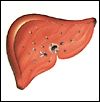
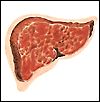 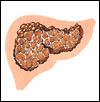
normal fibrosis cirrhosis
The normal liver
is smooth and firm to the touch. As liver disease progresses, changes
occur and damage to the liver increases. For example:
- Fibrosis.
After becoming inflamed, the liver tries to repair itself by forming
tiny scars. This scarring, called "fibrosis," makes
it difficult for the liver to do its job. As damage continues,
many scars form and begin to join together, leading to the next
stage, cirrhosis.
- Cirrhosis.
With repeated damage, large areas of the liver can become permanently
scarred and nodules may form. Blood cannot flow freely through
scarred liver tissue. The liver begins to shrink and becomes hard.
Chronic viral hepatitis is a common cause of cirrhosis of the
liver, as is excessive drinking.
- Liver failure.
As cirrhosis worsens, most liver function is lost. This means
the liver is unable to filter wastes, toxins, and drugs from the
blood. It can no longer produce the clotting factors necessary
to stop bleeding. Fluid builds up in the abdomen and legs, bleeding
in the intestines is common, and eventually mental functioning
is slowed. At this point, a liver transplant is the only option.
- Liver cancer.
Sometimes damage to liver cells includes altering the genes inside
cells in a way that causes them to become cancerous. Patients
with chronic hepatitis B or C are at higher risk for hepatocellular
carcinoma, a type of liver tumor.
A recent study published in the
New England Journal of Medicine attributed an increase in the number of cases
of hepatocellular carcinoma in the United States over the past 20 years to the spread
of HBV and HCV.
 |
11 of 13 |
 |
 

Terms and Conditions | Privacy Policy | Important Safety Information
|