Your body's chemical factory
The liver performs many varied and complex functions. It cleans and purifies the blood supply, breaks down certain chemical substances in the blood, and manufactures (synthesizes) others. The liver's four most important tasks are illustrated below.
1. Purification
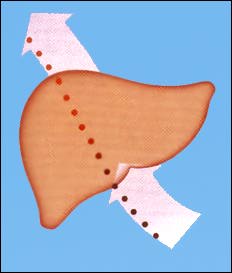
Harmful chemicals are changed into harmless substances

Substances such as drugs (i.e., acetaminophen) and alcohol are changed into an inactive form in the liver. Some substances are from outside the body (exogenous) and some are naturally occurring inside the body (endogenous). In addition, some drugs may be activated, rather than inactivated, by the liver before they can begin working.
While inactivation of exogenous substances like ethanol (alcohol) and nicotine is good for the whole body, liver cells may be damaged in the process. Detoxification of ethanol, for example, may harm the liver, leading to cirrhosis.
Some of the toxins broken down by the liver are manufactured by the body itself. For example, the body normally produces a large amount of ammonia in the intestines as food is being digested. The liver changes ammonia into urea, a substance that is removed in the urine.
Location of the liverFunctions of the liver:Purification
Functions of the liver: Synthesis
Functions of the liver: Storage
Functions of the liver:TransformationArchitecture of the normal liver


